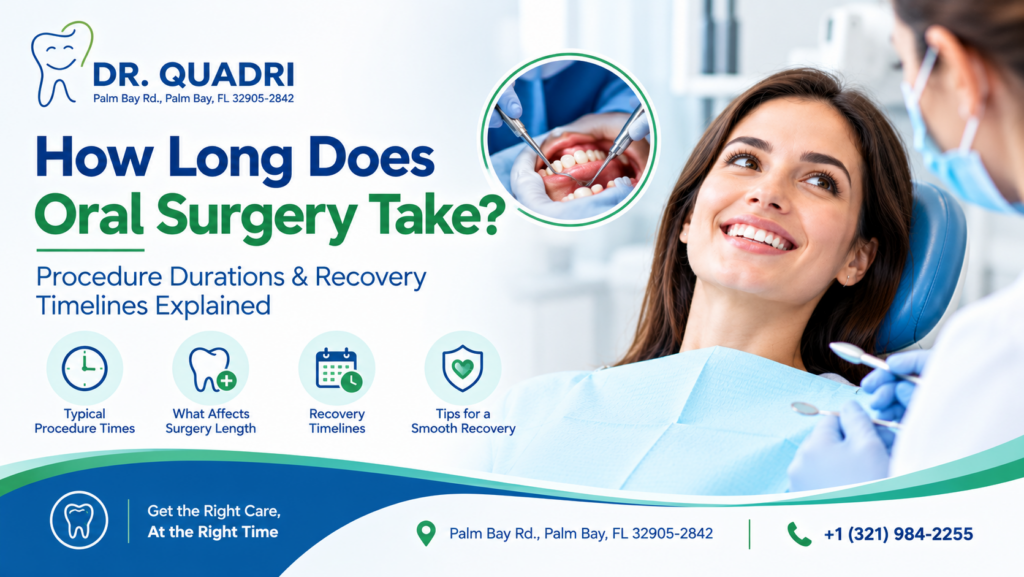


Most minor oral surgery procedures take between 30 minutes and 2 hours to perform. However, the exact time depends heavily on the specific procedure, the surgical complexity, the type of anesthesia used, and whether multiple treatments are being performed in a single visit.
Beyond the chair time, full tissue recovery, often referred to by patients asking how long does oral surgery take to heal, generally ranges from 3 to 14 days for soft tissues, while complete bone healing can take several months.
Understanding both the operational time in the chair and the post-operative recovery timeline helps reduce anxiety and allows you to plan appropriately for your treatment.
Procedure Breakdown: How Long Specific Oral Surgeries Take
The time required for dental surgery varies depending on whether you are receiving a routine extraction or a complex full-mouth restoration. Below is an overview of average procedural durations:
| Oral Surgery Procedure | Estimated Chair Time | Complexity Factors |
| Simple Tooth Extraction | 20 – 45 minutes | Single root, visible tooth above gumline. |
| Surgical / Impacted Extraction | 45 – 90 minutes | Wisdom teeth, bone removal, tooth sectioning. |
| Single Dental Implant Placement | 30 – 60 minutes | Bone density, precise post positioning. |
| Multiple Implants / All-on-X | 2 – 4 hours | Full arch restorations, immediate provisional placement. |
| Bone Grafting / Sinus Lift | 45 – 90 minutes | Site preparation, graft material placement. |
| Gum Grafting (Periodontal) | 60 – 90 minutes | Tissue harvesting, delicate suturing. |
What Happens During Your Surgical Appointment?
When calculating how long does oral surgery take, it is helpful to account for the three distinct phases of your appointment rather than just the surgical intervention itself:
- Pre-Operative Preparation (15–30 minutes): Reviewing medical history, verifying consent forms, monitoring vital signs, and administering local anesthesia or sedation.
- Active Surgical Procedure (20–120+ minutes): The precise clinical work performed by your dentist or oral surgeon, including incisions, tissue access, surgical site clearing, and placing sutures.
- Post-Operative Monitoring & Instructions (15–30 minutes): Allowing sedation to wear off, verifying blood clot stability, and reviewing home-care protocols with you or your designated escort.
Recovery Timelines: How Long Does It Take to Recover from Oral Surgery?
Patients often ask how long does it take to recover from oral surgery when planning time off work or school. Recovery typically occurs in two phases: initial soft-tissue recovery and complete biological healing.

Phase 1: Initial Soft Tissue Healing (24 Hours to 14 Days)
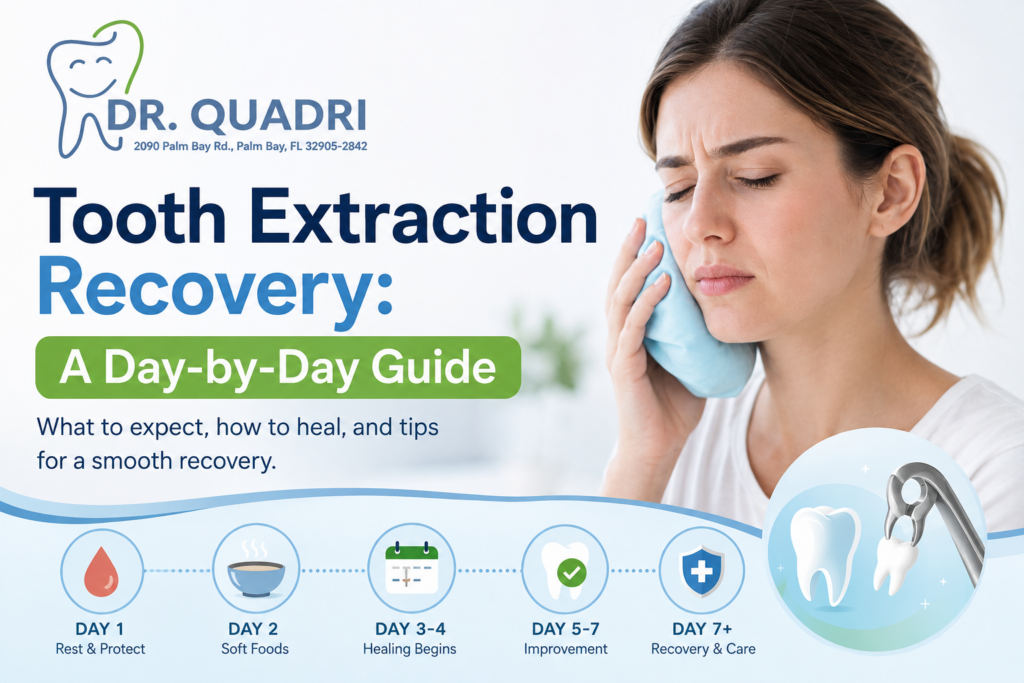
During the first 24 to 72 hours, your body focuses on forming a stable blood clot over the surgical site to shield exposed bone and nerves. Swelling and mild discomfort usually peak around day 3 before gradually subsiding. Most patients return to light daily routines within 2 to 4 days, while surface gum tissues generally close within 7 to 14 days.
Phase 2: Deep Tissue and Bone Healing (1 to 6 Months)
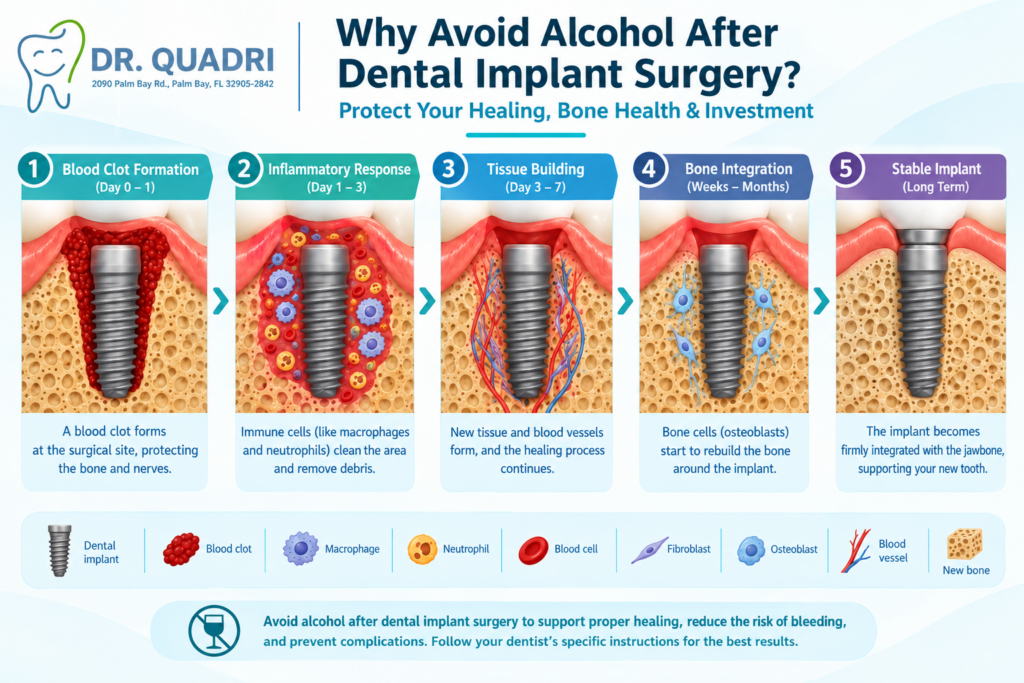
While you may feel completely back to normal after a week or two, deeper structures underneath the gumline take longer to fully remodel. For procedures like dental implants or bone grafts, the bone-fusion process (osseointegration) requires 3 to 6 months to establish permanent structural stability.
Key Factors That Influence Your Overall Surgical and Recovery Time
No two patients heal at the exact same rate. Several clinical and lifestyle variables influence both procedure duration and post-surgical recovery speed:
- Surgical Complexity: Impacted teeth, dense jawbone, or proximity to facial nerves require meticulous care, naturally extending procedural time.
- Anesthesia Choice: Local anesthesia allows for quick discharge immediately after the procedure. Oral or intravenous (IV) sedation requires additional time for pre-procedure monitoring and post-procedure recovery.
- Adherence to Aftercare Instructions: Following post-operative guidelines, such as avoiding straws, resting, eating soft foods, and maintaining gentle oral hygiene—directly prevents complications that could delay healing.
- Overall Health and Habits: Conditions such as diabetes, auto-immune conditions, or tobacco use can slow cellular repair and extend overall healing times.
Practical Tips to Accelerate Oral Surgery Healing
To minimize your recovery window and reduce the risk of post-surgical complications like dry socket or secondary infection, consider these evidence-based care steps:
- Rest Deliberately: Keep physical activity minimal for the first 48 hours to manage blood pressure and prevent surgical site bleeding.
- Use Cold Therapy: Apply ice packs to the exterior cheek in 15-minute increments during the first 24 to 48 hours to control swelling.
- Stay Hydrated: Drink plenty of water, but avoid using straws for at least 7 to 10 days to protect the developing blood clot.
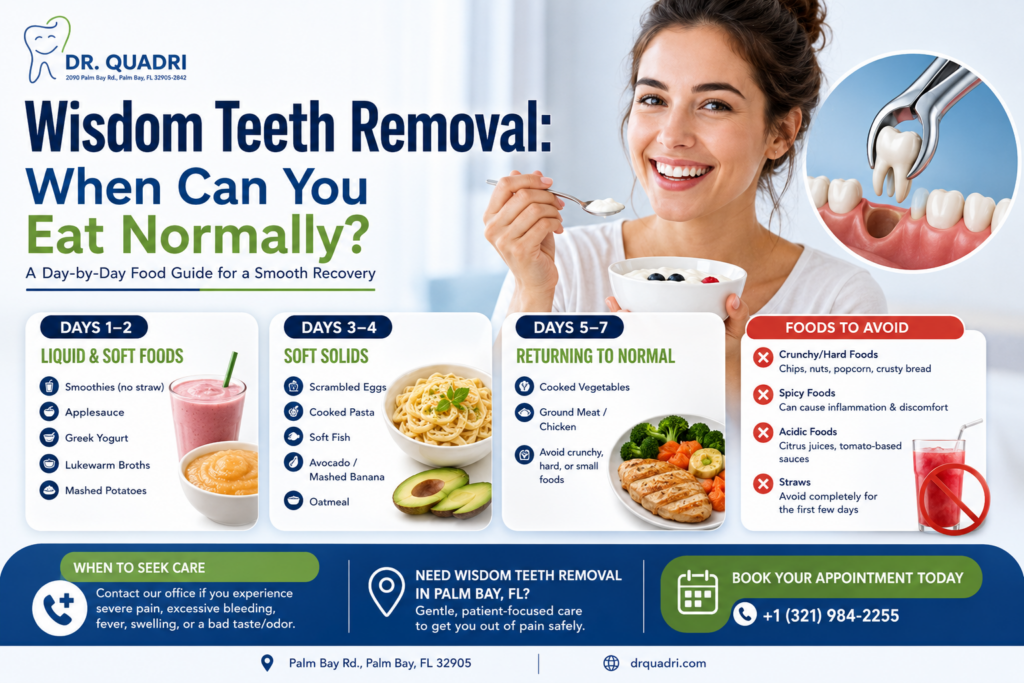
- Choose Soft Foods: Opt for smooth, nutrient-dense foods like yogurt, lukewarm soups, applesauce, and scrambled eggs before gradually reintroducing solid foods as comfort allows.
- Maintain Oral Cleanliness: Begin gentle warm salt water rinses 24 hours after surgery (or as directed by your dentist) to keep the area clean without disturbing tissue.
Patient-Centered Oral Care in Palm Bay, FL
If you require a tooth extraction, dental implant placement, or another restorative procedure in Palm Bay, FL, having clear expectations makes the entire process smoother and stress-free.
At Palm Bay Dental Center, Dr. Quadri and our compassionate team prioritize gentle clinical care, detailed pre-surgical planning, and comprehensive post-operative support. We tailor each procedure to your specific health needs, ensuring you receive precise time estimates and attentive follow-up care throughout your healing journey.
Whether you are seeking treatment for persistent dental discomfort or evaluating options to replace missing teeth, professional evaluation is the best step toward restoring your oral health.
A simple tooth extraction generally takes between 20 and 45 minutes from start to finish, including local anesthesia administration and immediate post-operative instructions.
Most patients feel significantly better within 3 to 7 days for simple procedures, though complete bone and soft tissue healing beneath the surface can take anywhere from a few weeks to several months depending on the surgery.
Most patients take 1 to 3 days off work for routine extractions or single implant placements. For complex or multi-tooth surgical procedures under sedation, 3 to 5 days of rest may be recommended.
Extensive procedures involving jawbone modifications or impacted teeth require more time because the body must regenerate both soft gum tissue and dense bone tissue, which naturally remodels at a slower pace.
If your procedure is performed solely under local anesthesia, you can typically drive yourself home. If you receive oral or IV sedation, you must have a responsible adult escort drive you home.
You can usually begin reintroducing soft solid foods after a few days as discomfort decreases. However, you should avoid hard, crunchy, or sharp foods directly over the surgical site until your dentist clears you.