

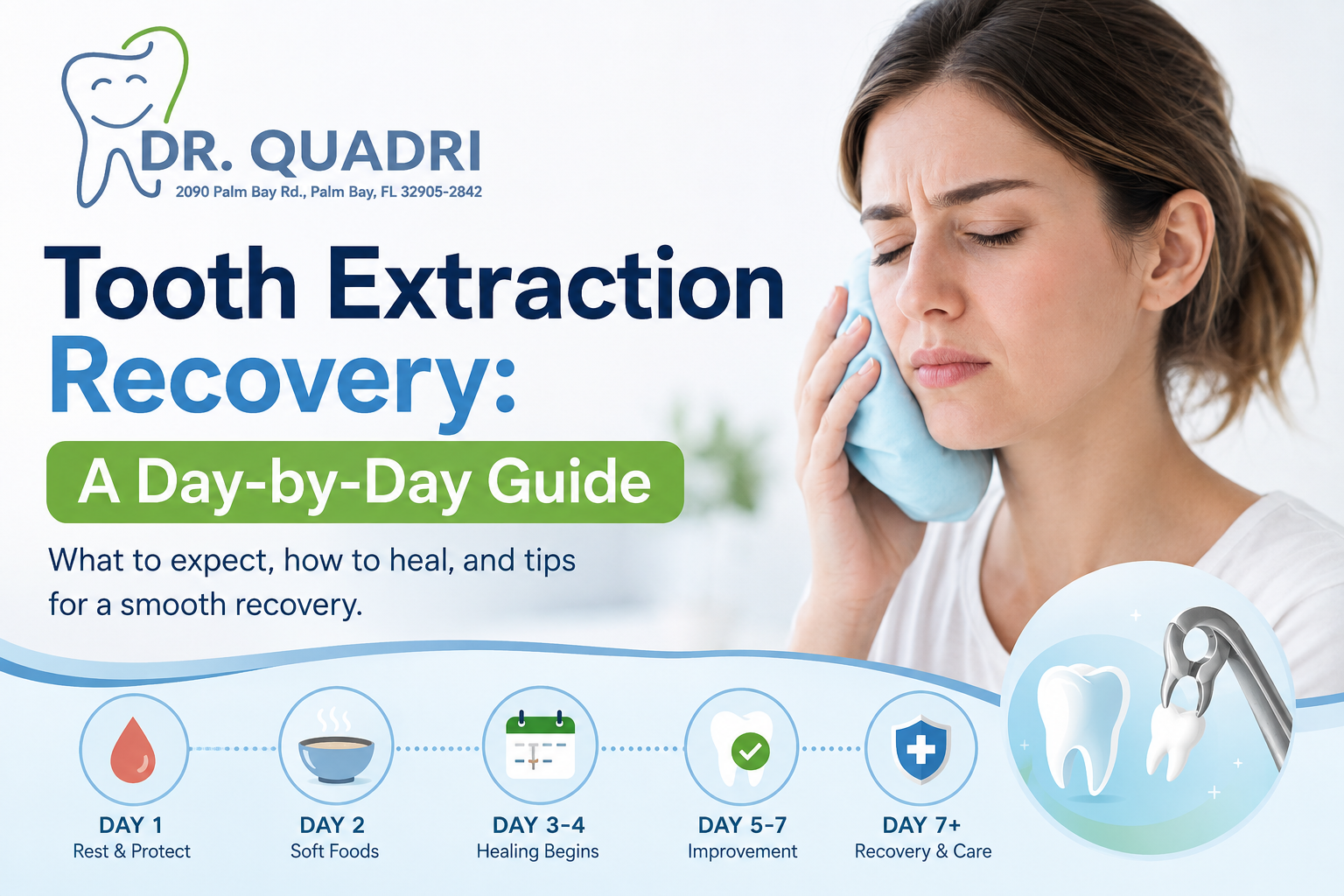
When a damaged, decayed, or crowded tooth cannot be saved, removing it is often the healthiest step forward. Once the procedure is behind you, one of the first questions on your mind is bound to be: How long will it take to feel normal again?
What Is the Typical Tooth Extraction Recovery Time?
For many patients, the first few days are the most uncomfortable. Pain, mild bleeding, swelling, and tenderness are common immediately after an extraction and generally begin improving as healing progresses.
A general recovery timeline looks like this:
| Recovery Stage | What You May Experience |
| First 24 hours | Blood clot formation, mild bleeding, tenderness and swelling |
| Days 2–3 | Discomfort and swelling may be most noticeable |
| Days 3–7 | Pain and swelling should generally begin improving |
| 1–2 weeks | Gum and soft-tissue healing continues |
| Several weeks or longer | The socket and underlying bone continue remodeling |
Understanding the recovery time of tooth extraction helps you plan your work schedule, meals, and rest. While initial healing happens relatively quickly, complete bone and tissue recovery varies depending on whether you had a simple extraction, a surgical removal, or a multi-tooth procedure like a 4 teeth extraction recovery time scenario.
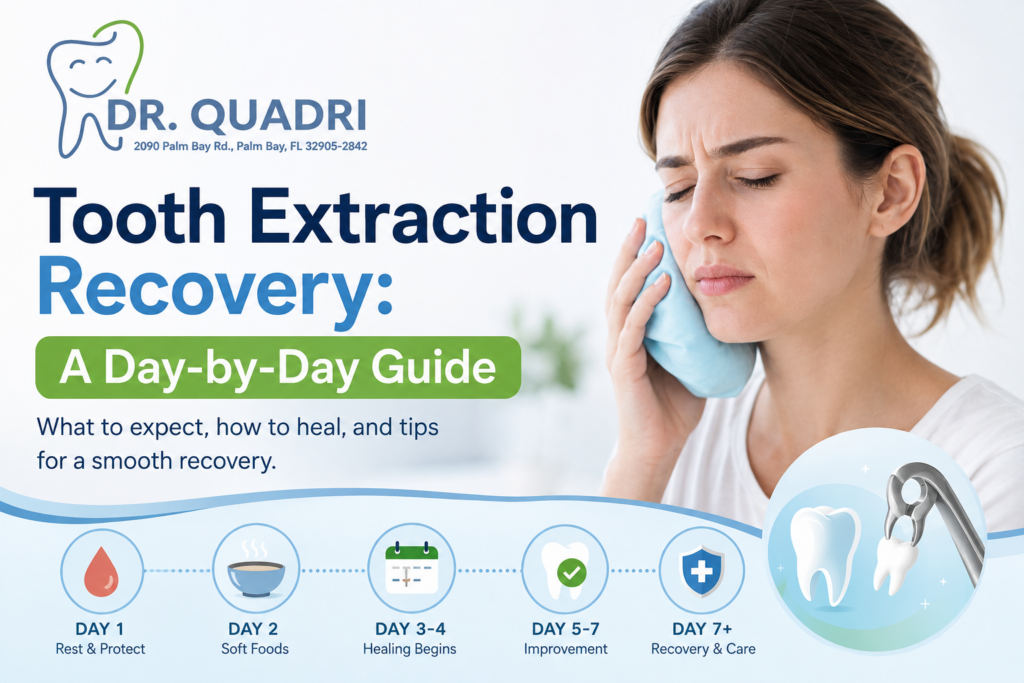
General Recovery Timeline: What to Expect Day-by-Day
The human body begins repairing the extraction site immediately through blood clot formation, the crucial foundation for proper healing. Here is a general breakdown of how the recovery process unfolds:
Days 1 to 3: The Initial Healing Phase
- What happens: A blood clot forms inside the empty tooth socket. Initial bleeding slows down and typically stops within the first 24 hours.
- Symptoms: Mild to moderate discomfort, swelling around the cheek or gum, and minor oozing are completely normal.
- Care focus: Rest, take prescribed or recommended pain relievers, avoid spitting forcefully, and do not use a straw.
Days 4 to 7: Soft Tissue Closure
- What happens: The gum tissue starts to heal and close over the socket. Swelling begins to subside significantly.
- Symptoms: Pain diminishes into mild tenderness. You can slowly reintroduce semi-soft foods into your diet.
- Care focus: Gentle saltwater rinses can begin after 24 hours. Continue avoiding hard, crunchy, or spicy foods that could irritate the site.
Weeks 2 to 4: Bone Remodeling and Deep Healing
- What happens: Beneath the surface gum tissue, the body begins filling the socket with new bone.
- Symptoms: Almost all surface discomfort disappears. The extraction site will feel much less sensitive.
- Care focus: You can typically return to your normal brushing and flossing routine around the area with care, though you should still follow any specific guidance provided by your dental care team.
Comparing Recovery Times by Extraction Type
Not all extractions heal at the same pace. The complexity of the procedure directly dictates how long your recovery will take.
1. Simple Extraction Recovery Time
A simple extraction involves a visible tooth that can be removed in one piece using dental instruments without major surgical intervention.
- Initial Recovery: 3 to 7 days.
- Deep Healing: Complete socket closure takes about 3 to 4 weeks. Most patients resume regular daily activities within 24 to 48 hours.
2. Recovery Time for a Wisdom Tooth Extraction
Wisdom teeth (third molars) often grow in impacted, angled, or trapped beneath the gum and bone, requiring minor oral surgery to remove. Because bone must be accessed, the recovery time for a wisdom tooth extraction is generally longer.
- Initial Recovery: 7 to 10 days.
- Deep Healing: Full bone regeneration in the lower jaw can take several months, but you will feel back to normal within a week or two. Swelling and stiffness in the jaw muscles peak around day 2 or 3 before fading.
3. 4 Teeth Extraction Recovery Time
Whether removing four wisdom teeth at once or clearing quadrants for orthodontic preparation, extracting multiple teeth simultaneously increases the body’s healing workload.
- Initial Recovery: 7 to 14 days.
- Dietary adjustment: Expect to maintain a soft-food or liquid diet for a full week. Returning to strenuous physical exercise should be delayed for at least 7 to 10 days to prevent spikes in blood pressure that can trigger renewed bleeding.
4. Root Canal vs. Tooth Extraction Recovery Time
Patients frequently ask about a root canal tooth extraction recovery time comparison when weighing treatment options. A root canal saves the natural tooth structure, meaning there is no open extraction socket; recovery from a root canal procedure usually takes just a few days of mild gum tenderness. Conversely, an extraction leaves a healing socket that requires blood clot preservation and bone remodeling over several weeks. Whenever possible, preserving a tooth via root canal therapy or restorative crowns is evaluated before resorting to extraction.
Essential Tips to Speed Up Your Healing
Protecting the delicate blood clot is the single most important factor in avoiding complications like dry socket—a painful condition where the clot dislodges prematurely.
- Keep gauze in place: Bite down gently on the initial gauze pad provided by your dentist to help stop bleeding.
- Apply ice packs: Use an ice pack on the outside of your cheek in 15-minute intervals during the first 24 hours to minimize swelling.
- Skip the straw and smoking: Suction from straws or the motion of smoking can dislodge the blood clot. Avoid both for at least a week.
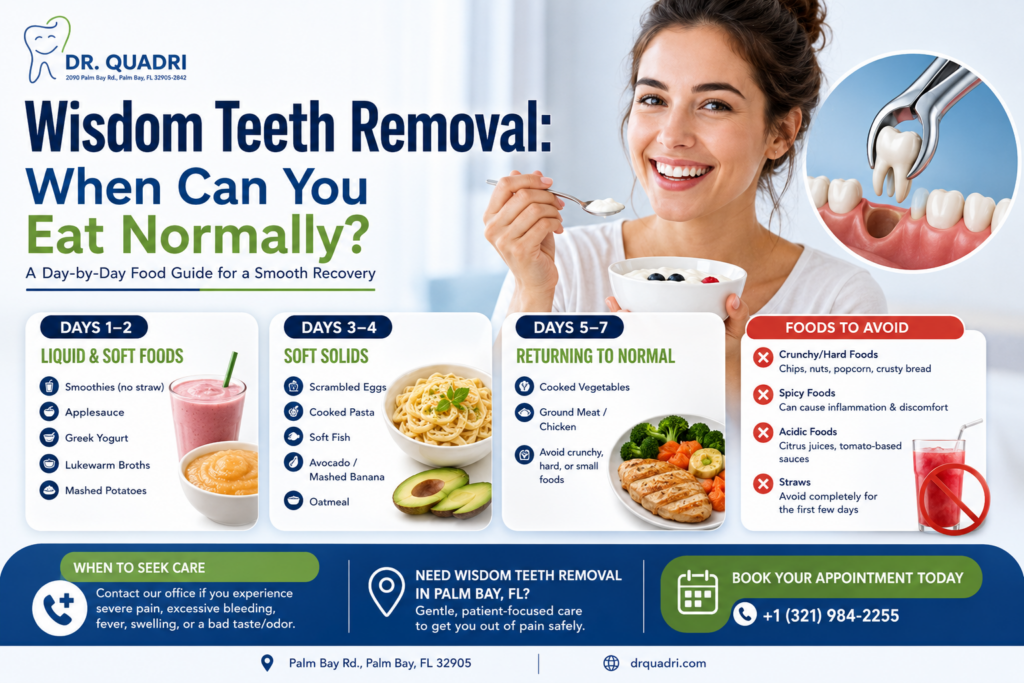
- Eat smart: Stick to nutrient-dense soft foods like yogurt, mashed potatoes, and lukewarm soups during the first few days.
When to Contact a Professional
While mild discomfort, swelling, and minor oozing are expected parts of healing, certain symptoms require professional evaluation. Reach out to your dental provider if you experience:
- Severe, worsening pain that radiates toward your ear or temple after 3 to 4 days.
- Uncontrolled or heavy bleeding that does not slow down after applying direct pressure with clean gauze.
- A high fever, persistent chills, or foul-tasting discharge from the socket, which can indicate an infection.
- Numbness in your lip or tongue that persists long after the local anesthesia has worn off.
Comprehensive Dental Care in Palm Bay, FL
Navigating a smooth recovery starts with expert planning and gentle treatment techniques. At Dr. Quadri’s Palm Bay Dental Center, we prioritize patient comfort from diagnosis through post-procedure care. Whether you are dealing with a compromised tooth that requires a safe extraction, exploring restorative options like dental implants, or seeking a trusted family dentist in Palm Bay, FL, our team is here to support your oral health goals.
If you are experiencing tooth pain or suspect you may need an extraction, schedule a consultation with Dr. Quadri’s Dental Center today to discuss your options safely and comfortably.
Ready to Discuss Your Tooth Extraction?
Recovery can vary considerably depending on the tooth, procedure, and individual patient. If you have persistent pain, swelling, bleeding, or questions about whether a tooth should be removed, professional evaluation is the safest way to determine the next step.
Patients in Palm Bay can schedule a dental consultation with Dr. Quadri’s Palm Bay Dental Center to discuss tooth extraction, wisdom tooth concerns, restorative options, or other dental needs.
Book an Appointment or learn more about tooth extraction services.
Pain and discomfort generally peak within the first 24 to 48 hours and typically subside significantly within 3 to 5 days. Mild tenderness around the adjacent gum tissue can linger for up to a week.
No, you should avoid chewing directly on the extraction site and stick exclusively to soft or liquid foods for the first 24 to 48 hours. Most patients can slowly transition back to a normal diet after about 7 days, depending on comfort levels.
A dry socket occurs when the protective blood clot inside the extraction socket disolves or dislodges prematurely, exposing underlying bone and nerves. You can prevent it by avoiding smoking, refraining from using straws, and not rinsing or spitting forcefully during the first 24 hours.
Surface gum tissue typically heals and closes over the empty socket within 1 to 2 weeks, though complete bone regeneration underneath takes several weeks to months.
Most patients can return to non-strenuous work or school within 1 to 2 days, provided their job does not involve heavy physical exertion or intense talking.
Yes, mild to moderate facial swelling is common, especially following surgical or wisdom tooth extractions. Swelling usually peaks around the second or third day before gradually resolving.
You should continue brushing and flossing your other teeth normally, but take care to gently bypass the immediate extraction site for the first few days to avoid disrupting the healing tissue.
You should avoid heavy lifting, vigorous workouts, and elevated physical activity for at least 3 to 5 days (or up to a week for surgical extractions) to prevent increased blood pressure and renewed bleeding.