
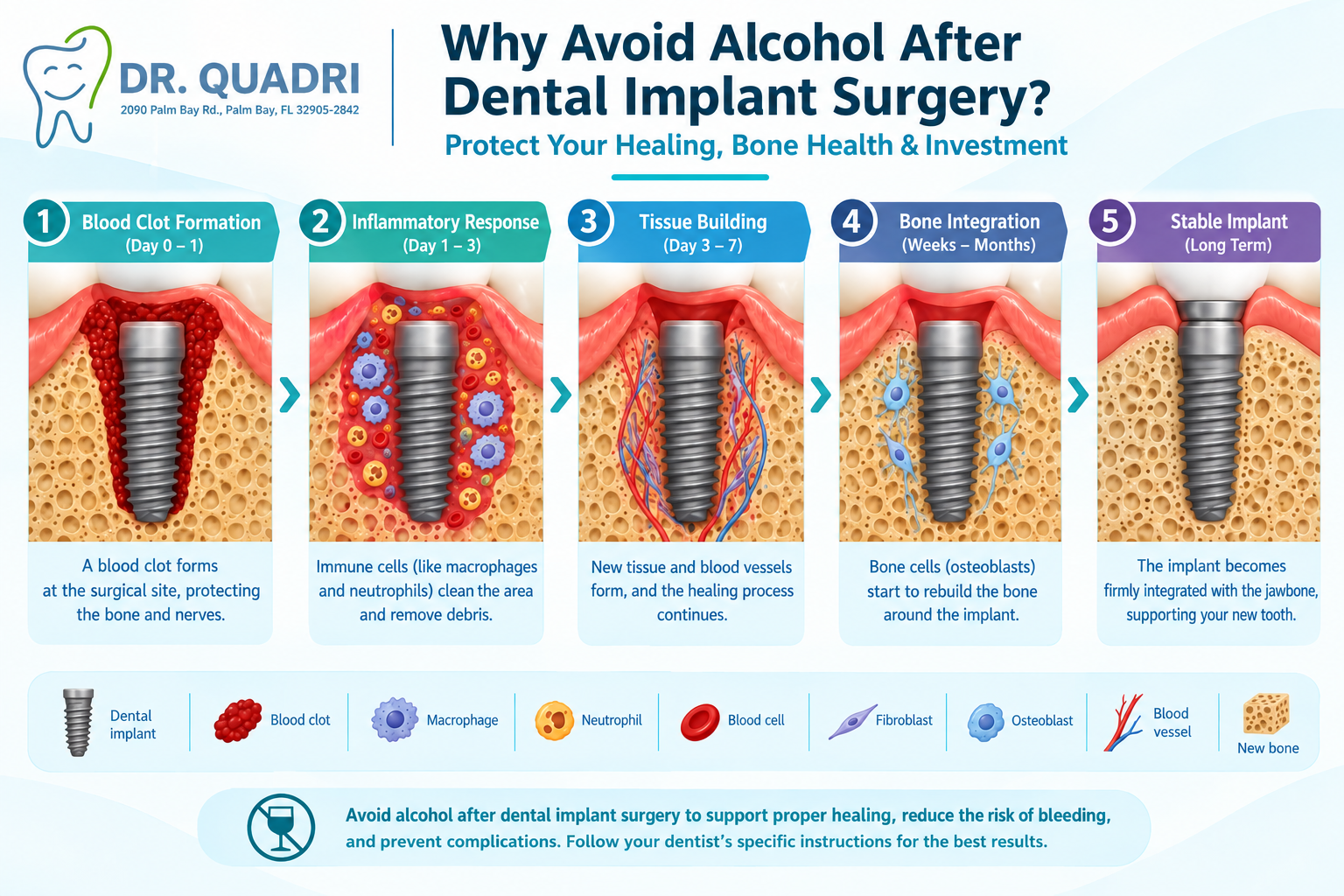
Drinking alcohol after dental implant placement poses significant risks to biological healing and can lead to surgical failure. Alcohol thins the blood, disrupts vital blood clot formation, impairs your body’s immune system, and directly interferes with osseointegration, the process by which your jawbone fuses with the titanium implant post.
For optimal recovery, avoid alcohol completely for at least 7 to 14 days after dental implant surgery, or until your oral surgeon or dentist clears you.
The Biological Risks: What Alcohol Does to Healing Surgical Sites
A dental implant is a sophisticated medical device designed to serve as a permanent, artificial tooth root. Following placement into the jawbone, your body immediately initiates a delicate tissue repair and bone remodeling response. Introducing alcohol during this early healing phase compromises recovery in four critical ways:
1. Blood Thinning and Delayed Clot Formation
Alcohol acts as a systemic vasodilator and anti-platelet agent. Within the first 24 to 72 hours post-surgery, your body relies on a stable blood clot over the surgical site to protect open bone and tissue. Alcohol dilates blood vessels and thins the blood, increasing post-operative bleeding, preventing clot stability, and delaying early tissue closure.
2. Disruption of Osseointegration
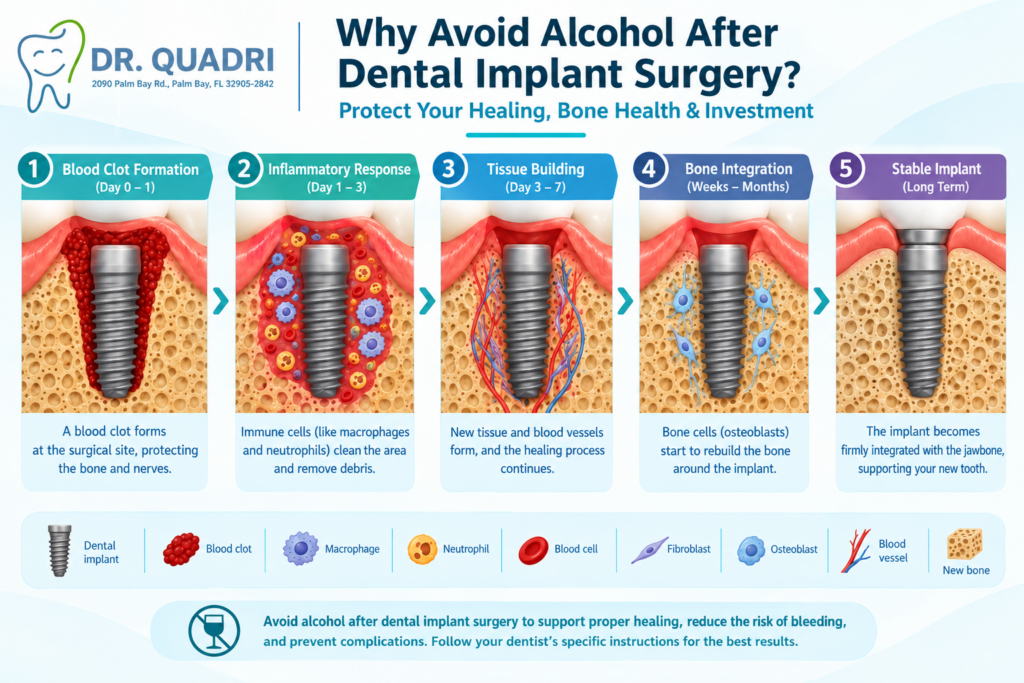
Long-term implant success relies entirely on osseointegration—the structural connection between living jawbone cells (osteoblasts) and the bio-compatible titanium surface.
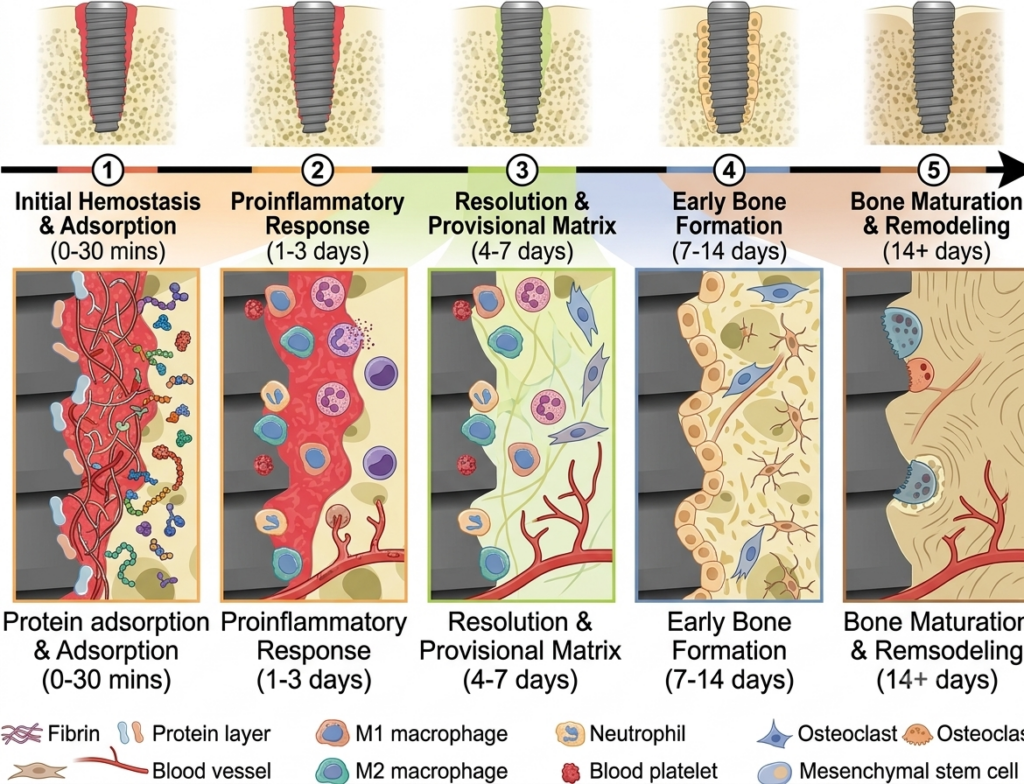
As illustrated in the healing stages above, successful integration requires undisturbed cellular adhesion and new vessel growth (angiogenesis). Alcohol consumption impairs osteoblast activity and reduces hydration, slowing down bone formation and increasing the risk of early implant mobility or failure.
3. Increased Vulnerability to Post-Surgical Infection
Alcohol dehydrates oral tissue and inhibits immune function by altering white blood cell performance. Dry, compromised mucosal tissues allow oral bacteria to penetrate surgical wounds more easily, raising the risk of local peri-implant infections or painful complications like dry socket when extractions are performed alongside implant placement.
4. Severe Interactions with Prescription Medications
Post-surgical care often includes prescription pain relievers, anti-inflammatory medications, or antibiotics. Consuming wine, beer, or liquor while taking these drugs can cause dangerous systemic complications, including liver strain, extreme drowsiness, stomach ulcers, or reduced antibiotic efficacy.
Recovery Timeline: When Can You Safely Drink Alcohol?
| Timeframe After Surgery | Alcohol Recommendation | Biological Healing Focus |
| First 24–72 Hours | Strictly Prohibited (0%) | Initial blood clot formation, inflammation control, primary tissue closure. |
| Days 4–7 | Avoid Completely | Early soft tissue healing, suture stability, and initial cellular migration. |
| Days 8–14 | Consult Your Dentist | Soft tissue repair stabilizes; osseointegration accelerates in the underlying jawbone. |
| 2 Weeks & Beyond | Moderate Use Only (If Cleared) | Ongoing bone density development around the titanium post. |
Answers to Common Patient Questions: Extractions, Wisdom Teeth, and Wine
Many patients undergoing implant consultations ask how alcohol restrictions apply to other common oral procedures or milder beverages like beer and wine.
Can I drink alcohol 24 hours after tooth extraction?
No, you should not drink alcohol 24 hours after a tooth extraction. The first 24 to 48 hours are critical for forming and maintaining the protective blood clot in the empty socket. Drinking alcohol within 24 hours drastically increases the risk of dislodging this clot, exposing underlying nerve endings and bone to the painful condition known as dry socket.
When can you drink alcohol after wisdom teeth removal?
Patients should wait a minimum of 7 clear days before drinking alcohol after wisdom teeth removal. Wisdom tooth extractions create larger surgical sites in the back of the jaw, often requiring longer soft-tissue healing times. Drinking too soon can trigger renewed bleeding, heightened facial swelling, and secondary infection.
How long after surgery can you drink wine?
You should refrain from drinking wine, including red, white, or rose, for at least 7 to 14 days following oral surgery. While some view wine as a light beverage, it contains both alcohol and high levels of natural acidity. Acidic beverages irritate tender surgical gums, burn healing tissues, and slow down early cellular regeneration.
Essential Post-Operative Tips for Implant Success
To ensure your dental implant integrates smoothly, follow these foundation principles alongside your localized care instructions:
- Hydrate with Water: Drink plenty of room-temperature water to keep oral tissues hydrated and encourage cellular repair.
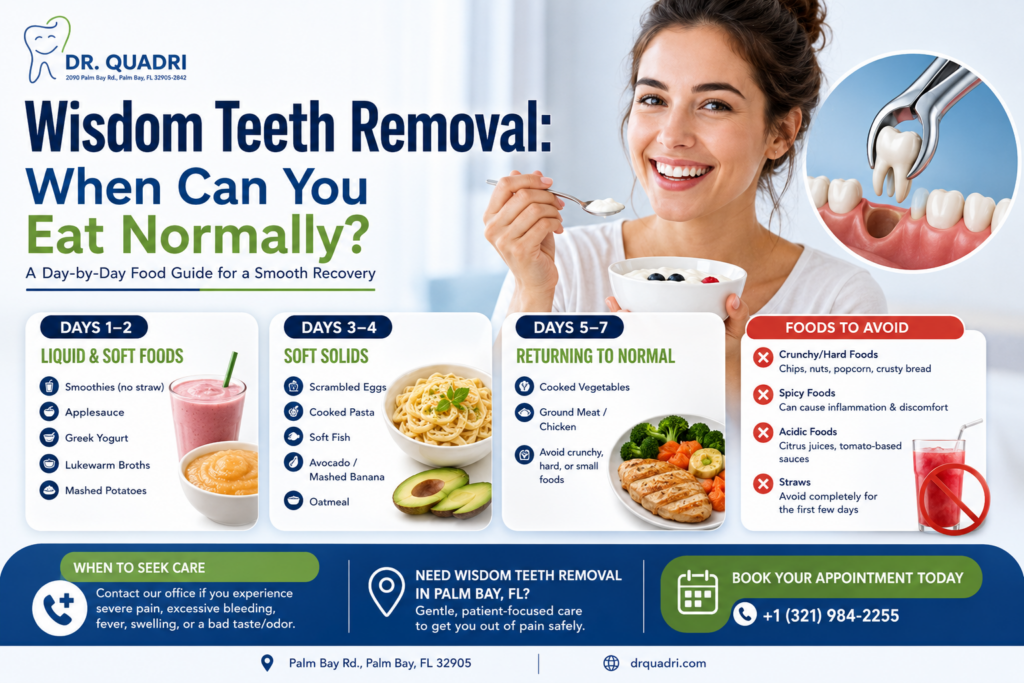
- Stick to Soft Foods: Enjoy nutrient-dense soft foods such as Greek yogurt, mashed potatoes, scrambled eggs, and lukewarm pureed soups during the first week.
- Avoid Straws: Never use a straw for drinking liquids during the first week; the suction pressure can dislodge healing blood clots.
- Maintain Gentle Oral Hygiene: Continue brushing your remaining natural teeth gently, but avoid direct pressure over the fresh surgical site until advised by your dentist.
- Avoid Tobacco Products: Like alcohol, smoking or vaping severely restricts blood flow and significantly lowers dental implant success rates.
Restorative Dental Care at Palm Bay Dental Center
If you are considering dental implants or recovering from a surgical procedure in Palm Bay, FL, individualized professional supervision is the most effective way to ensure lasting success.
At Palm Bay Dental Center, Dr. Quadri provides comprehensive restorative and preventive dentistry tailored to your health profile. From initial consultation and precise surgical placement to clear, personalized recovery guidelines, our dedicated team supports your smile every step of the way.
If you have questions about your healing progress, post-operative care instructions, or replacing missing teeth with durable titanium implants, we invite you to schedule a professional evaluation.
Alcohol is restricted because it thins the blood, disrupts clotting, increases infection risks, and inhibits osseointegration, the process where your jawbone fuses with the implant post.
It is not recommended. Drinking beer or wine 3 days post-surgery introduces alcohol and acids to healing tissue, which can re-trigger bleeding and irritate sensitive gum wounds.
If you consumed a small amount, stop drinking immediately, drink plenty of water to stay hydrated, and monitor your mouth for increased bleeding, severe swelling, or sudden pain. Contact your dentist if concerning symptoms develop.
Yes, even if your surgery was performed under local anesthesia, systemic alcohol consumption impairs your body’s cellular immune response and blood coagulation for days after the anesthetic wears off.
Most patients can safely resume moderate alcohol consumption 2 weeks after surgery, provided the surgical site has closed properly and your dentist has cleared your healing progress.
Frequent or heavy alcohol consumption during the initial healing phase significantly elevates the risk of early implant failure due to poor bone fusion (osseointegration) and chronic tissue inflammation.